
Building Homes with a Sustainability Advantage.
By Emma Forsyth and Katie Galloway
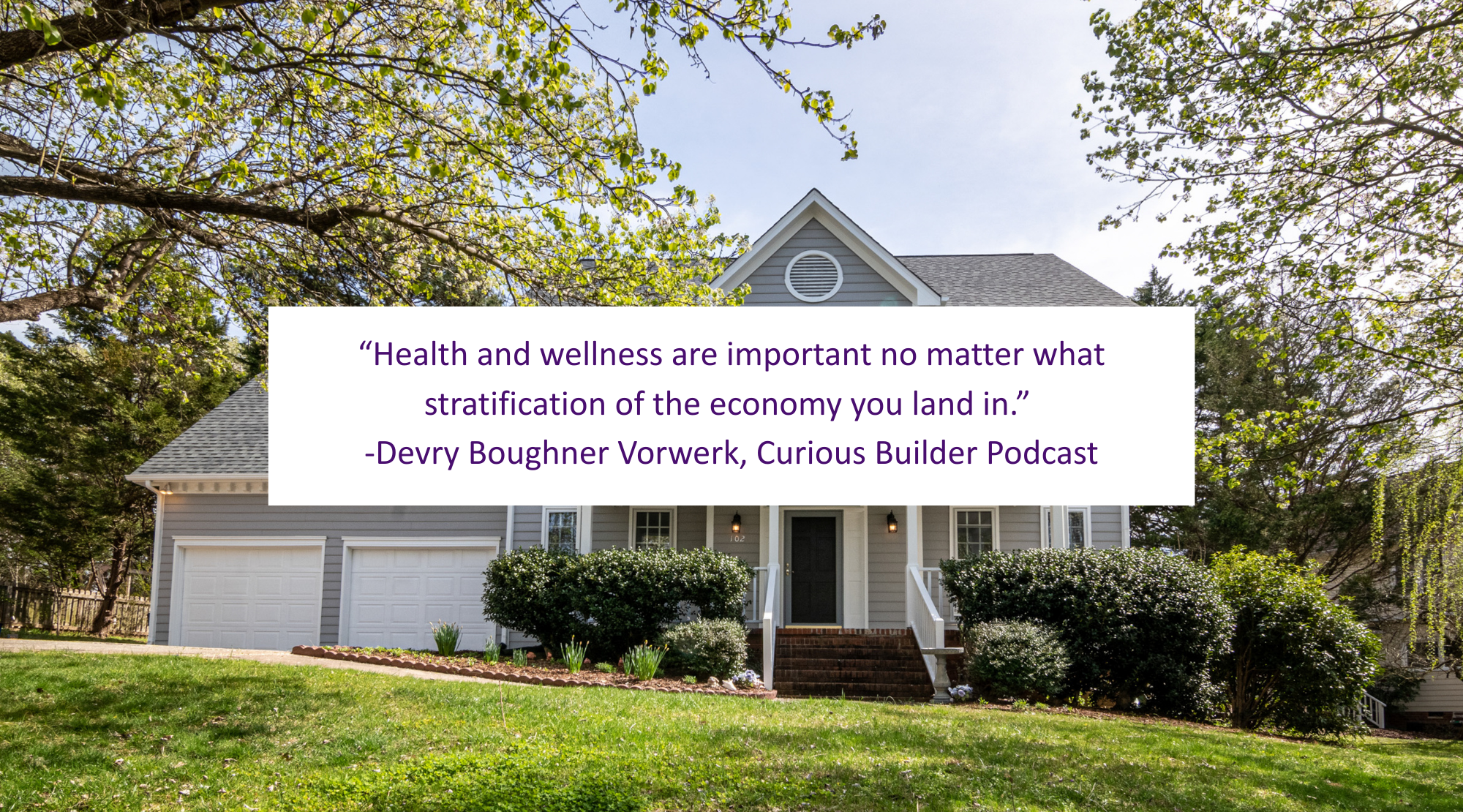
Stewardverse Strategies founder Devry Boughner Vorwerk was recently a guest on the Curious Builder Podcast to discuss sustainability in the homebuilding and remodeling industry. Interviewed by podcast host Mark Williams, founder of Mark D. Williams Custom Homes, the conversation spanned topics such as construction waste and building materials, stewardship as a leadership principle, and their shared belief that home serves as the foundation for health and wellness.
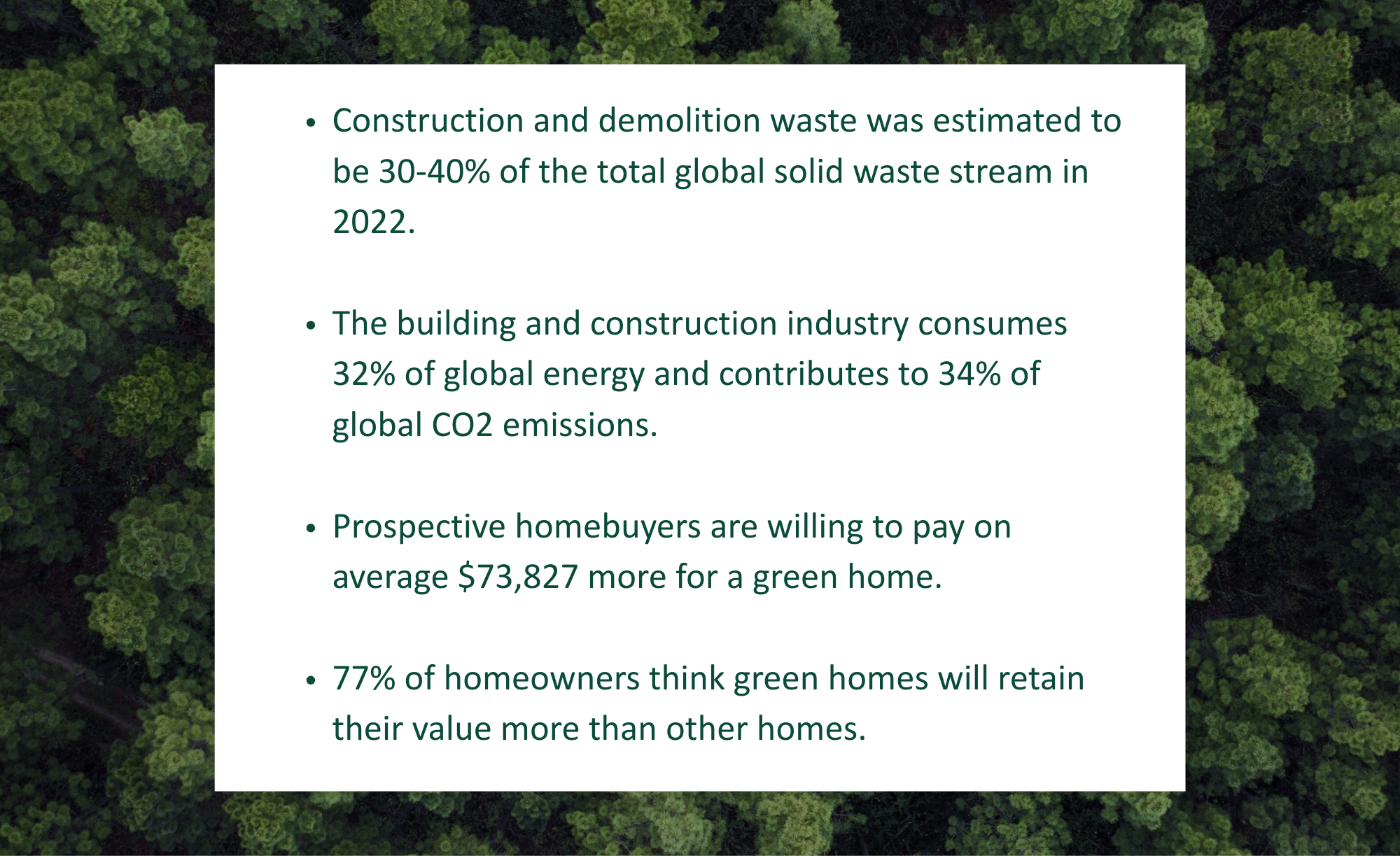
This philosophy is a hallmark of Mysa Hus, a signature project of Mark D. Williams Custom Homes, designed in alignment with the principles of intentional living, functional design, and deep connection to nature. These principles are rooted in sustainability and speak to the fact that for many, the spaces where we dwell can be a jumping off point for “going green.” In fact, according to a recent survey, prospective homebuyers are willing to pay on average $73,827 more for a green home, and 77% of homeowners think green homes will retain their value more than other homes. Primary motivators for demand are the long-term cost savings from energy-efficient homes, along with the perceived health benefits associated with living in a green home.
The construction industry has certainly taken note and is responding to consumer preferences, increasing regulations, and pressure to reduce the negative impact of buildings on the environment. The building and construction industry consumes 32% of global energy and contributes 34% of global CO2 emissions, according to a March 2025 report by the UNEP. Homebuilders and remodelers have a large toolbox to draw upon to reduce their environmental impact and create healthier, more comfortable, and energy-efficient homes. By approaching the home design, building, and renovation process with an eye toward efficiency, waste reduction, and health, builders create positive impacts, contribute to sustainability goals, help meet the needs of customers, and are rewarded in the marketplace.
Green Building Principles.
Sustainable Design: Green building begins by imagining and designing spaces to function in harmony with the surrounding natural environment.
Bring the outdoors in by choosing window placement for optimal natural daylighting and ventilation to reduce heating and cooling costs, which account for 50% of a home’s energy consumption.
Builders can also consider the philosophy of “small house, big life” in the design phase, as surveys show some homebuyers prefer a smaller, greener home to the alternative. Sustainable design considers ways to use space more efficiently while enhancing the functionality of the home and strengthening family connections.
Sustainable Materials: Renewable, recycled, repurposed, low-toxicity, and low-impact alternatives for common building materials.
Choosing high-quality, efficient materials is often better for people and the planet; common chemicals in building materials have been linked to adverse effects on human health, causing headaches, asthma, and even increasing the risk of some cancers.
Plastics, “forever chemicals” such as PFAS, flame retardants, and phthalates are chemicals that have been linked to health impacts that frequently appear in many building materials.
By choosing low-toxicity materials in building practices, human health is improved, and environmental benefits are gained, such as reduced atmospheric ozone formation, acid deposition, photochemical smog, and climate change effects.
Builders can also pledge to follow the International Green Construction Code (IgCC) that limits chemicals in building materials while also prioritizing better indoor environments and neighborhood connections, and lower impact on natural resources.
Efficiency: Incorporating smart technology and the latest in efficient appliances and fixtures helps save natural resources while also creating an economic advantage for homeowners in the long run. In fact, over a five-year period, green buildings see an average operating cost reduction of 16.9%.
Energy efficiency can be improved through high-efficiency HVAC, LED lighting, triple-pane windows, and enhanced insulation.
Renewable energy potential should also be considered, with options ranging from pre-wiring roofs for solar arrays, electric vehicle charging, and electrification of major appliances.
Water-saving appliances and low-flow fixtures help to conserve precious water resources, reducing the impact on local groundwater and watersheds, while also lowering the homeowner’s water bill.
Waste Management: Construction and demolition waste was estimated to be 30-40% of the total global solid waste stream in 2022 (Science Direct).
Waste management starts with the proper handling of construction and demolition materials, including potentially hazardous materials.
Builders can use thoughtful planning to minimize waste during the construction process with a focus on using recyclable materials whenever possible and aiming for deconstruction, rather than demolition, to sort and salvage reusable materials.
Work with reputable waste management partners and operate in compliance with local laws and regulations to minimize the amount of waste going to landfills. In 2018, the US EPA reported that of the 600 million tons of construction waste generated annually, approximately 76% is diverted from landfills.
Measurement and Reporting to Build Your Brand.
Businesses from all types of industries now measure, track, and disclose their sustainability data to inform stakeholders of their progress toward social and environmental goals. Sustainability reporting is done to keep investors apprised of risks and opportunities, and also to share key results and achievements with customers and consumers. Measurement and reporting aren’t about greenwashing, rather the opposite. It provides validated results that demonstrate either positive or negative impacts and defines areas for efficiency, cost reduction, and innovation.
Given the array of green building practices available to reduce environmental impact, some level of measurement and reporting by homebuilders offers a concrete and consistent way for the industry to show the positive impact being made on the natural environment, as well as on human health of those who dwell in their built spaces. Again, surveys repeatedly show that consumers want more sustainable products and believe that green homes offer many advantages.
Builders that respond to that demand can create a competitive advantage and use sustainability as part of their brand, differentiating themselves and offering something buyers want, all while conserving resources.
Building and Living Green.
Everyone wants to live, work, and play in spaces that are healthy. By making informed choices during the construction process, the resulting space can minimize environmental harm while supporting overall well-being for the residents. Projects such as Mark D. William’s Mysa Hus serve as an inspiration for incorporating thoughtful design, demonstrating how builders can achieve efficiencies and reduce waste in the construction process, and also create a space that fosters improved wellness and connection for the people who live there.
Creating healthy homes and healthy bodies starts with achievable goals that fit your lifestyle. While building a brand-new home may be a once-in-a-lifetime opportunity for many families, renovations and improvements to existing or newly occupied spaces offer meaningful moments to make sustainable choices that enhance long-term health and wellness. The starting place is intentionality in every project.
The focus on wellness in homebuilding is part of a much larger trend. The global health and wellness industry reached a record $6.8 trillion in 2024, according to the Global Wellness Institute, and has doubled in size since 2013. For builders, developers, and designers, this growth represents significant marketplace value. Consumer demand continues to shift toward wellness-oriented products and environments that integrate lifestyle, health, and efficiency, which will have a growing presence in the home building industry.
Whether you’re a home buyer, builder, or starting a do-it-yourself renovation, the design and construction process presents opportunities to incorporate sustainability principles. By building sustainably, you can truly hit the nail on the head when it comes to healthy living, benefiting both people and the planet.
