
Farmers Are Not Passengers: Five Lessons from the BRICS Debate for American Agriculture
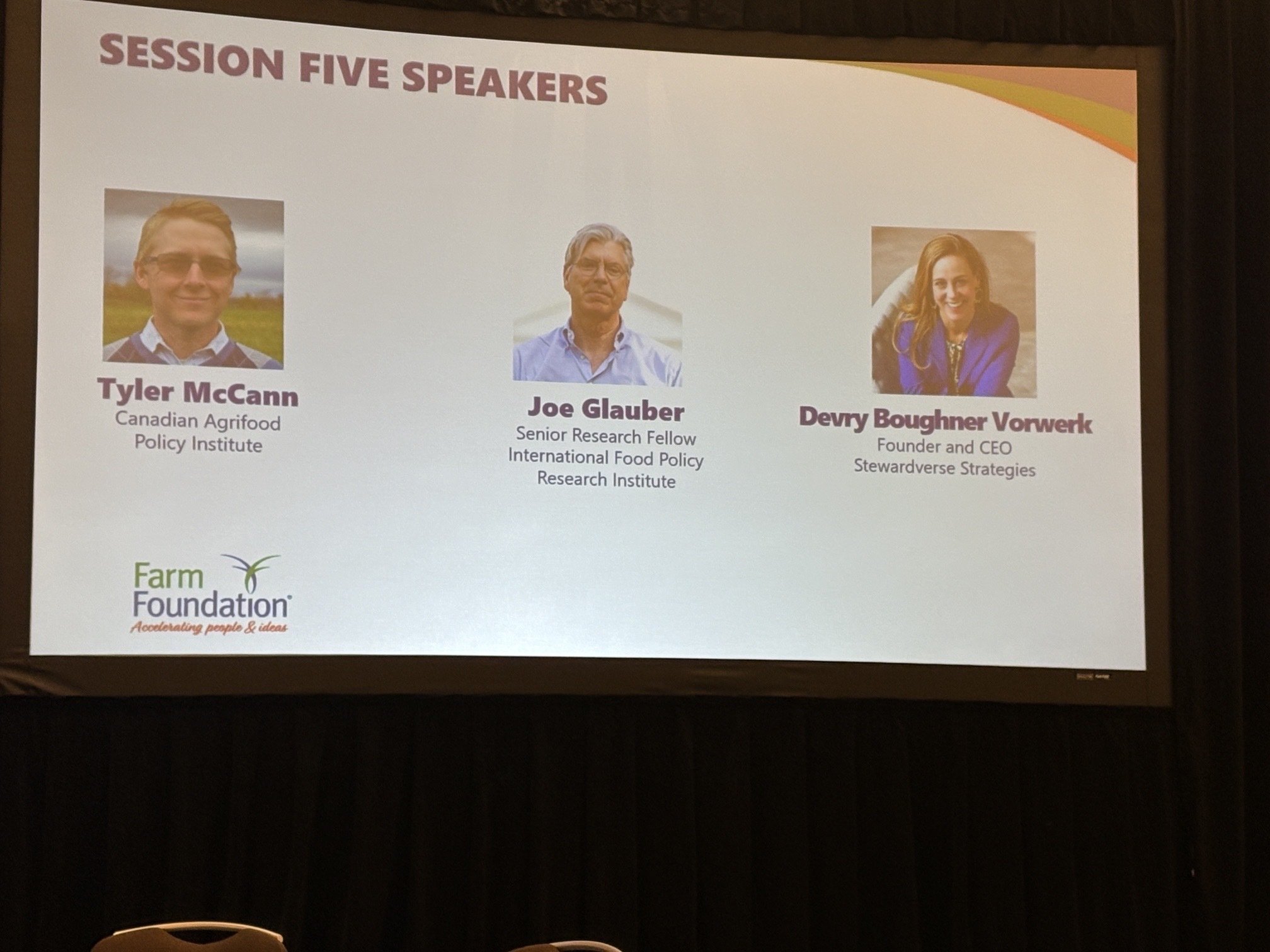
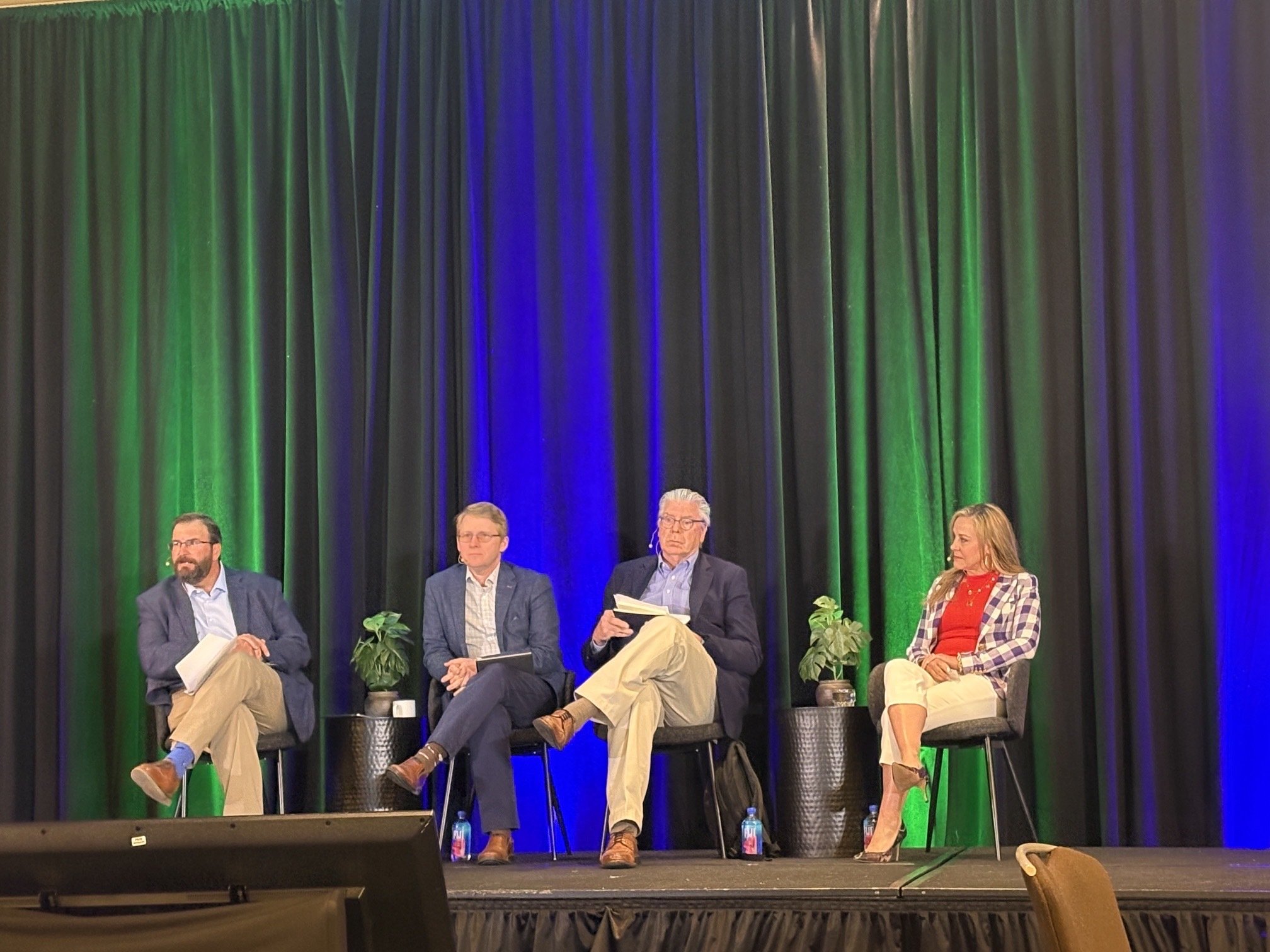
On June 17th I had the honor of presenting on a panel at the Farm Foundation’s 100th Roundtable to discuss BRICS (Brazil, Russia, India, China, South Africa) as a trade configuration and what that means to the U.S. agricultural economy that is dependent on international trade.


It was fitting to be in St Louis right next to the giant Mississippi River and the famous Arch. As I contemplated the final touches of my comments while sitting in my hotel room, I took a gander out the window to see the massive and swift moving interconnected set of barges full of grain, making their way down the river. I knew they were headed for the Gulf in Louisiana. Nealy 60% of all US ag exports make their way down that grand river whose headwaters begin in Minnesota. We are truly blessed to have that waterway and its tributaries in our country. It is part of our comparative advantage in global agriculture.
To the group I was presenting, these full barges represented the bounty of their labor, of the labor of the farmers sowing their seeds to feed our country and the world. They are metaphorically full of loaves and fishes. I didn’t take the opportunity to share my thoughts on BRICS lightly. My expertise and lived career experience is in global trade, food and agricultural policy, multinational business, and geopolitics, and my goal when engaging audiences on these topics is to provide insights into effectively and sustainably producing and moving food across borders to meet the nutritional and caloric needs of every human.
So, with that in mind, here is what I set forth on BRICS.
What is BRICS and Why Did It Come About?
There’s a great primer here from the Council of Foreign Relations on all the details of its origins, but the condensed version is that Russia wrangled BRIC in 2009 to unite around two things: (1) a commitment to move toward de-dollarization of the global economy and (2) different pathway to source and deploy financing. Of course Russia would convene in this manner as a global pariah and often subject to US sanctions for its sordid actions under Putin. After its first convening, BRIC was pluralized in 2010 with the “S” because of China’s invitation to South Africa.
At the 2023 BRICS Summit, invitations were extended to Argentina (declined), Egypt, Ethiopia, Iran, Saudi Arabia (accepted, but delayed joining), and the United Arab Emirates (UAE). Indonesia joined in 2024, and at the 2024 Summit, a swath of countries (i.e., Belarus, Bolivia, Cuba, Kazakhstan, Malaysia, Nigeria, Thailand, Uganda, and Uzbekistan) was invited as “partner countries.”
Is BRICS a Threat to U.S. Trade Dominance?
In my view, the short answer: yes, but perhaps not for the reasons most people think. I prepared five points for the panel discussion, though time only allowed me to touch on a few of them, so I am expanding on my conversation with the panel here. Together, my five points form a framework for understanding why BRICS deserves our attention.
1. Commerical Trade Network, Not BRICS.
The question is not whether BRICS succeeds. The question is whether the world is reorganizing around multiple commercial centers rather than a single center. Commercial power rarely disappears overnight. It shifts when trade routes, financing systems, institutions, and relationships begin organizing around different centers of gravity. BRICS may simply be one manifestation of that larger trend.
History does not turn because of one summit communiqué. History turns when commercial networks reorganize, and the actors that make up BRICS represent demand, competitive supply, and capital allocation (especially UAE and Saudi Arabia). Together BRICS is an emerging commercial bloc without the trade rules underpinning it.
History does offer an important reminder that commercial dominance is rarely permanent, but neither is it accidental. In the 17th century, the Dutch Republic sat at the center of global commerce. Amsterdam was the world's financial capital. Dutch merchants dominated shipping. Dutch finance underwrote international trade. To many observers at the time, Dutch dominance appeared inevitable, yet commercial gravity shifted.
Britain invested heavily in naval power, infrastructure, industrial capacity, and commercial institutions. It built networks that attracted trade, talent, and capital. Over time, the center of gravity moved from Amsterdam to London.
The same thing happened again. During the late 19th and early 20th centuries, the United States emerged as the world's leading commercial power. That did not happen because of geography alone. It happened because the United States invested in railroads, ports, universities, scientific research, industrial innovation, and a legal framework that enabled commerce to flourish. It built institutions and put its heft behind the General Agreement on Tariffs and Trade (GATT) that others wanted to join and markets that others wanted to access.
The lesson is that commercial leadership is not inherited. It is earned and continually renewed. History suggests that major shifts in commercial power rarely begin with military conflict. They begin when governments, businesses, investors, and institutions intentionally build new networks of trade and commerce around a different center of gravity.
That is why I view BRICS as a signal, a flashing caution light.
The real question is not whether BRICS will replace the United States. The real question is whether the United States will continue making the investments and building the relationships necessary to remain the world's preferred commercial partner.
2. Food Is Sovereignty.
For decades, agriculture was largely viewed through the lens of efficiency, productivity, and lowest-cost production. Increasingly, food is being viewed through the lens of national security, food security, climate security, and resilience. When nations begin thinking about food through the lens of resilience rather than efficiency, the rules of trade change. We see this in strategic grain reserves, fertilizer policies, water access concerns, export restrictions, and efforts to diversify supply chains. Agriculture is becoming strategic again.
I define sovereignty not as each country producing all its own food, but rather, having a handle on its food supply in a manner that it is not vulnerable.
3. Where Government Meets, Business Follows.
One of the most important indicators to watch is not what BRICS leaders say, but what businesses do. It’s a lesson from my years of international commercial diplomacy. I would always find portals to engage governments, whether bilateral, regional, or global. Where government met on policy, I would make sure I or my team was present.
For example, the G7 and G20 (I would prefer G19 by kicking Russia out, but I digress) matter because businesses organize around them. The WTO matters because businesses organize around it. APEC and ASEAN have entire ecosystems of business councils, investors, industry groups, universities, think tanks, and commercial relationships that surround their government activities. In many ways, the business architecture becomes as important as the diplomatic architecture.
That is why I pay less attention to BRICS summit communiqués and more attention to the evolution of its supporting ecosystem. I think of BRICS as moving through four stages.
The first stage is government coordination. This is where BRICS largely began: heads of state meetings, ministerial gatherings, declarations, working groups, and the creation of institutions such as the New Development Bank.
The second stage is business engagement. This is where we begin to see business councils, trade associations, commodity groups, investment forums, and industry leaders convening alongside governments. This stage signals that private sector actors are beginning to see value in organizing around the platform.
The third stage is commercial infrastructure. Here we start seeing dedicated financing mechanisms, logistics networks, commodity trading systems, standards-setting bodies, sustainability frameworks, and supply chain integration. This is where ideas begin to translate into commerce.
The fourth and final stage is market gravity. At that point, businesses no longer ask whether they should engage. They ask how they can afford not to. Participation becomes self-reinforcing because customers, suppliers, capital, and opportunities are increasingly concentrated within the ecosystem.
The moment I see agribusinesses, banks, investors, logistics companies, commodity traders, and industry associations organizing themselves around BRICS in a sustained way, I stop treating BRICS as a diplomatic forum and start treating it as a commercial center of gravity.
Where government meets, business follows. And where business organizes, markets eventually follow.
4. The Zheng He Lesson.
About 20 years ago I read the book 1421 by Gavin Mendes. While some disputed his claims on when the Chinese came to America, I learned that five hundred years ago, China possessed one of the world's most sophisticated trading fleets under Admiral Zheng He. Then China chose inwardness. They burned their junks and the fleets disappeared. The networks disappeared. The influence disappeared.
Today, China appears to be making the opposite choice through infrastructure investments, trade corridors, development finance, and institution-building.
The lesson is not that China was once powerful. The lesson is that commercial dominance is ultimately a choice. Commercial influence expands when nations build networks and contracts when they stop building them.
The question is not whether China is building networks. The question is whether we are.
5. Farmers Are Not Passengers.
Perhaps the most important point I shared is that farmers are not passengers in this changing world. Too often our conversations about trade focus on risk management and adaptation. Those are important, but history suggests the winners do more than adapt. They help create the future.
American agriculture became dominant because previous generations invested in research, infrastructure, innovation, markets, and relationships. They built advantages.
The challenge before us is not simply protecting what we have. It is building the next generation of agricultural advantage. That means investing aggressively in agricultural research, strengthening our land grant universities, expanding extension services, supporting agricultural economics and trade expertise, embracing innovation, and pursuing commercial diplomacy in growth markets.
If agriculture is becoming a matter of national security globally, then agricultural innovation must become a national security priority here at home.
What Should the United States Do About BRICS?
The short answer is not to fear it, nor to ignore it. We must pick it apart. We should take it seriously, and the first step is recognizing that trade relationships cannot be managed from the sidelines. We cannot expect to dominate global trade while absenting ourselves from conversations taking place in some of the world's fastest-growing economies. We must fan out and engage many of the BRICS nations and the affiliates.
Commercial diplomacy must once again become a priority. Agriculture and food organizations should be actively building relationships in countries such as India, Indonesia, Pakistan, Vietnam, Egypt, Nigeria, Saudi Arabia, the UAE, and Ethiopia. These are not merely future markets. In many cases, they are today's growth markets.
Second, we must pursue a future-focused trade agenda. The United States cannot afford to retreat from trade at the very moment new commercial alignments are forming. One of the most important opportunities on the horizon is the upcoming renegotiation of the United States-Mexico-Canada Agreement (USMCA). Rather than treating North America as three separate economies, we should view it as the most productive and integrated agricultural platform in the world. North American integration remains one of our greatest competitive advantages. Strengthening should be a central pillar of our response to a changing global landscape.
Third, we must return to building alliance on food aid. Some of our strongest trading partners today came about from deploying aid when the country needed it. Best example of this soft power is South Korea who went from an aid relationship to a trade relationship. The development South Korea has experienced post war is the strongest example of trade and commercial diplomacy can do for pulling a country from poverty.
Finally, we must remember that America's greatest agricultural advantage has never been land and natural resources alone. It has been our ability to turn knowledge into productivity through research, innovation, entrepreneurship, and collaboration.
The barges I watched moving down the Mississippi River this week represented more than grain. They represented generations of investment, ingenuity, and relationships that made the United States the agricultural powerhouse it is today.
The challenge before us is straightforward.
We cannot expect to shape the rules of global trade if we are absent from the tables where our trading partners gather. We cannot expect markets to come to us if we are unwilling to build relationships with the people and nations driving future growth. And we cannot assume that yesterday's advantages will automatically carry us into tomorrow. The future of agricultural trade will belong to those who show up, engage, innovate, and lead.
Farmers are not passengers on that journey. They are builders and leaders of whatever comes next.